Archives 2017

Muscle Stimulation – Ab + Back Innovation Long Overdue

Ab + Back muscle stimulation has been absent in the market.  Ab belts have been around for many years.  Many of them are compression style belts that can hold the “belly” in, giving the appearance of being slimmer.  Back belts have also been around for many years.  They typically have some sort of splinting or support in the lower back that helps people support weak back muscles, especially during activity, work related lifting or sitting at your desk.

Electronic muscle stimulation or EMS has also been around for many years.  The use of EMS started with athletes in Eastern Block countries like Russia, Bulgaria and others.  Scientists discovered that electronic stimulation of muscles would enhance sport performance by both increasing strength and accelerating muscle recovery.  Use of EMS has continued into the modern day athlete or sports competitor.

In the early 2000’s the world started seeing electronic stimulation ab belts.  Many were poorly made and most were ineffective.  By 2003, the United States had taken most of them out of circulation.  One company survived.  Slendertone by BioMedical Research (Galway, Ireland).  By 2007, Contour Technology (company founded by Dale Henn) launched an FDA Cleared ab belt of its own.  By 2010, Slendertone created a new version called FlexBelt in 2010.  All three are FDA Cleared for sale without a prescription.  They are all good products with some having better features than the other.

In 2017, STIMFIT launched in the United States and Europe.  STIMFIT uses the same Swiss Stimulation Technology that Contour used in its original product from 2008 – 2012.  This technology is from Valmed, SA … a Swiss medical device company.  There are many differences between Slendertone, Contour, and FlexBelt but the biggest difference is that STIMFIT can be used for Abs and Back.  It’s the first EMS product that can work the entire core.  Before making the decision to purchase an ab belt, make sure you check out the big differences  between all of them.  Consumers should take a balanced approach to fitness.  Having strong abdominal muscles is as important has a strong back.  Plus, STIMFIT has a “circulation” program that provides soothing pulses to give relief to sore back muscles due to activity.  STIMFIT Ab + Back is distributed by BODYLOGIC WEARABLES.

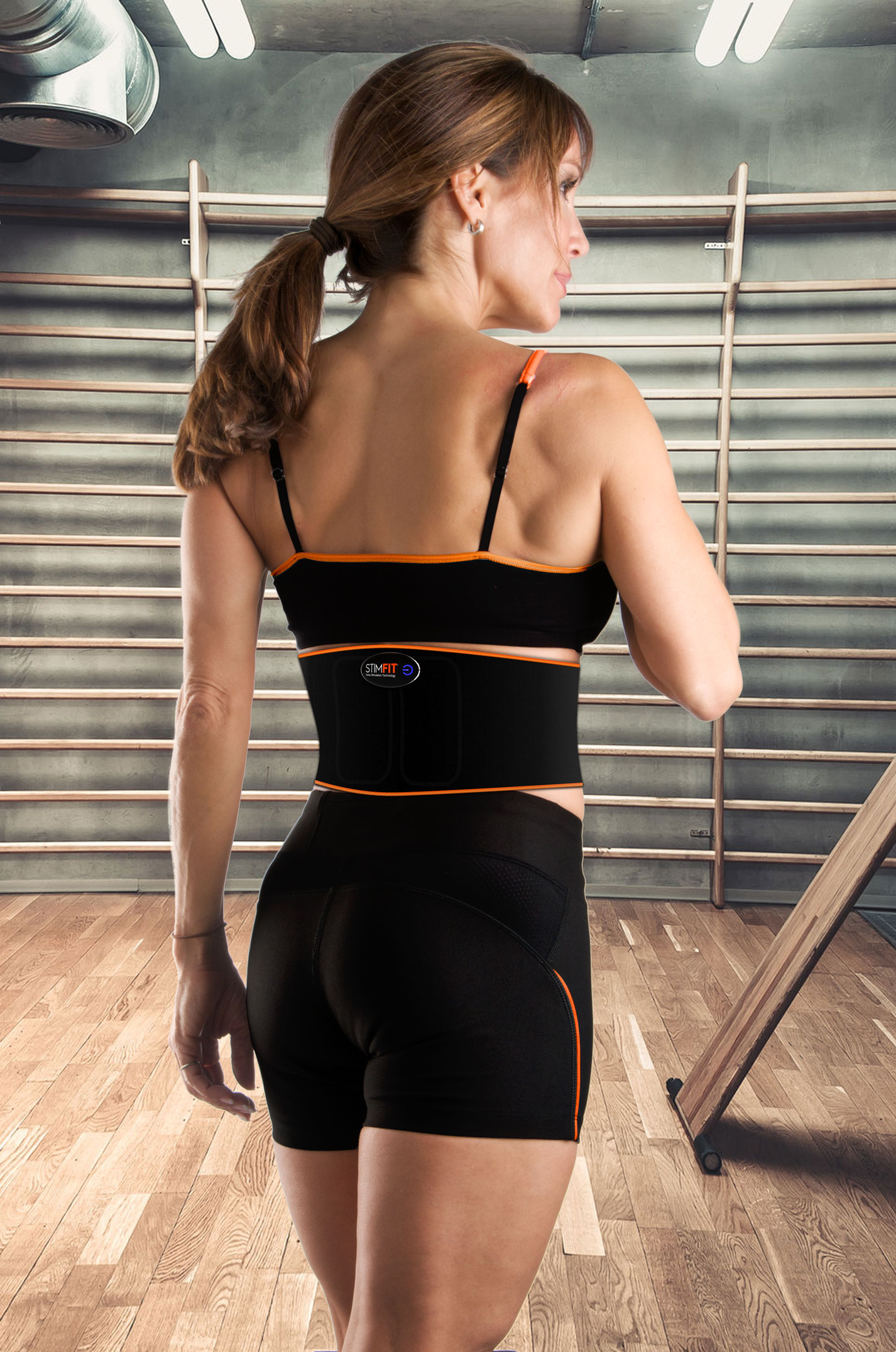
Leah Garcia back belt

Calorie Burning Boosted by EMS

In recent years, numerous studies have demonstrated that electronic muscle stimulation (EMS) can boost calorie burning.  The studies concluded that using EMS, a person could stop the decline of metabolism with age.  Findings also show an increase from 20% to over 50% increase in calorie burning just by using EMS on the abdominals.  If you’re looking to increase calorie burning, you might want to try EMS.  It’s easy, more efficient than traditional training and it can be hidden under clothing so nobody has to know you’re trying to burn more calories.

Contour EMS Research Paper

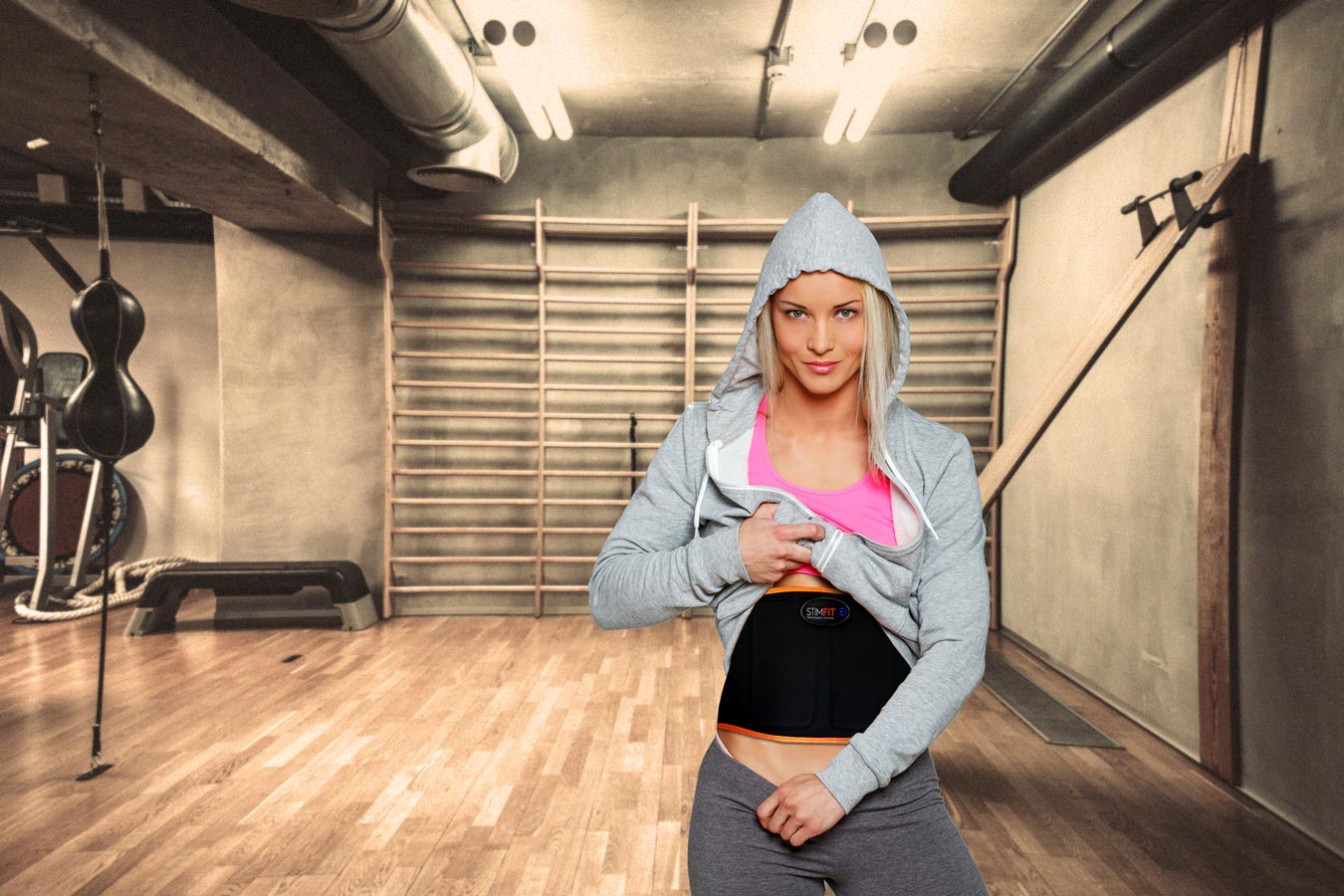
STIMFIT Woman Hoodie AbBelt

STIMFIT Woman Hoodie AbBelt

Nano Sized EMS Powerhouse.

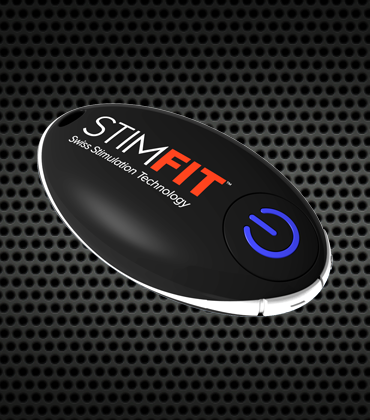
STIMFIT® is a  new electronic muscle stimulation product.  It’s an innovation AbBelt featuring Swiss Stimulation Technology from Valmed SA.  It is the World’s Most Smallest & Powerful AbBelt.

EMS device by STIMFIT

EMS device by STIMFIT

The Early EMS Years

Since the 1950s, electronic muscle stimulation (EMS) devices have been used to enhance muscle and sports performance.  The former Soviet Union were pioneers.  They used EMS with athletes.  The effectiveness from the early years has been widely written about but most are unpublished.  The size of these devices has changed through the decades.  A single device was so big it had to sit on a table.  Another disadvantage was the EMS devices had to be connected to a wall outlet for power.  It wasn’t until the 1990s that EMS devices could run on batteries and were small enough to be handheld.  Compex SA, a Swiss-based medical device company led the way and were sold initially in Europe.

The Modern Era

By the early 2000s, they had competition.  In 1999, an American company, Rehabilicare, acquired Compex SA.  They continued to grow the European business.  They changed their name to Compex Technologies, Inc.  By 2003, they created an over-the-counter division led by Dale Henn.  Compex remained the dominant EMS device in the United States until 2007.  Compex also distributed a leading abdominal belt from Ireland named Slendertone.  This was the leading abdominal belt in Europe and they were seeking a way to enter the USA market.  Together, Compex and Slendertone dominated the USA market for a number of years.  Compex Technologies was acquired in 2006 and sales plummeted for a few years.Contour Technology was founded by Dale Henn after he departed

Dale Henn founded Contour Technology in 2006.  Contour’s developed their device using another Swiss-based medical device technology from Valmed SA.  By 2008, Contour became the dominant EMS device in the United States.  Contour manufactured and sold an abdominal belt but the device could also be used as a handheld device like Compex.  Contour dominated the USA until 2011.  Slendertone evolved their product and the device became even smaller than the handheld size of Compex and Contour.  Since 2011, Slendertone’s brand FlexBelt has led sales in the United States.

The Future Has Arrived

In 2015, after nearly 5 years of research and development, Dale Henn has re-emerged as founder of BodyLogic Wearables, a wearable EMS system.  He has partnered again with Valmed SA who has continued to innovate.  Valmed has shrunk the size of the device without sacrificing performance.  In 2016, BodyLogic launched STIMFIT, the World’s Smallest and Most Powerful EMS device.